Liquid dosage forms are rapidly gaining importance in the pharmaceutical, nutraceutical, and health supplement industries due to their enhanced bioavailability and faster absorption. Among the available technologies, liquid-filled hard capsules and softgel capsules are the two most widely used solutions. However, their differences in production process, equipment configuration, cost structure, and final product performance make the selection process critical for manufacturers.
Brief Answer:
Softgel production lines are highly automated, continuous systems suitable for large-scale manufacturing with superior product appearance and sealing performance, but they require high initial investment and strict environmental control. Liquid-filled hard capsule production lines are more flexible, cost-effective, and easier to operate, making them ideal for small-to-medium scale production and diverse formulations.
Liquid-filled hard capsules and softgel capsules differ fundamentally in both structure and manufacturing technology. Liquid-filled capsules use pre-formed two-piece capsules that are filled and then sealed, while softgels are produced through an integrated forming-filling-sealing process using rotary die technology. This distinction leads to significant differences across multiple operational and economic dimensions.
From a technical definition perspective, liquid-filled hard capsules refer to pre-manufactured two-piece capsules filled with liquid, semi-solid, or suspension formulations and subsequently sealed (typically via banding or thermal sealing). Softgel capsules, in contrast, are produced using rotary die encapsulation technology, where gelatin ribbons are formed, filled, and hermetically sealed in a single continuous process.
This structural and process difference directly determines procurement priorities in terms of equipment configuration, facility design, and supplier selection.
From a procurement and commercial perspective, product appearance is closely tied to brand positioning and market acceptance.
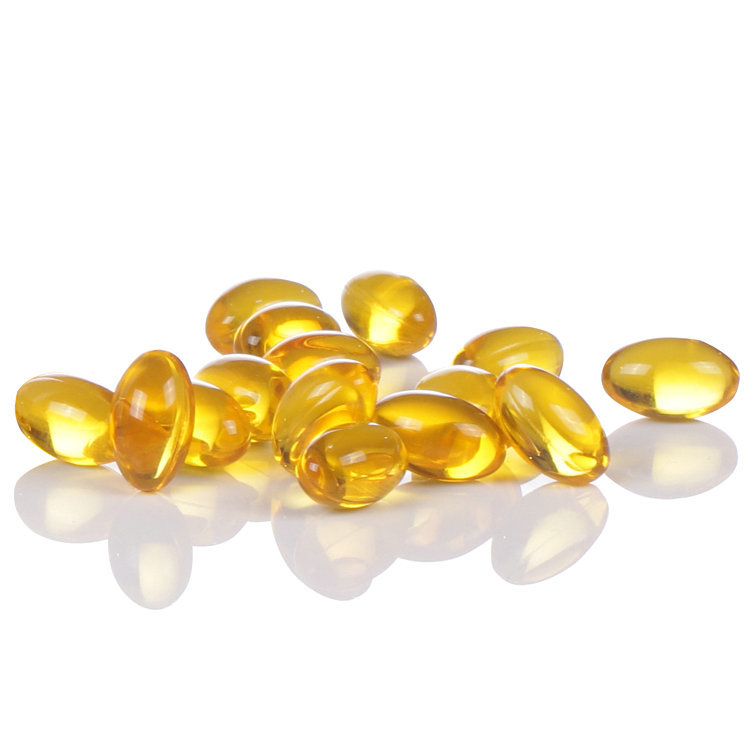
Softgel capsules:
· Seamless, one-piece structure with no visible joint
· High transparency or opacity depending on formulation
· Customizable shapes (oval, oblong, round) and colors
· Suitable for premium markets such as dietary supplements in Europe and the United States
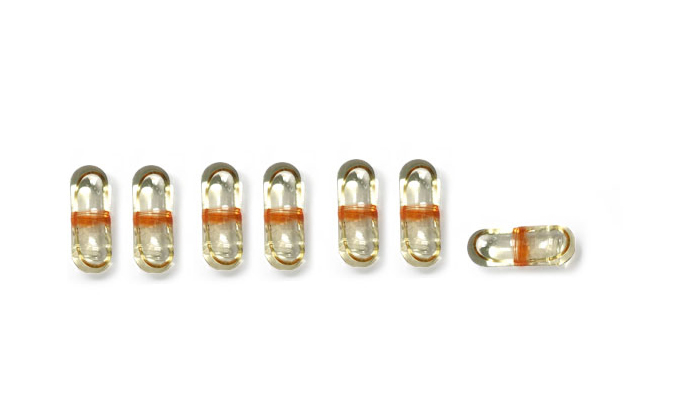
Liquid-filled hard capsules:
· Two-piece structure with visible cap-body junction
· Optional band sealing improves integrity but not aesthetics
· Limited customization compared to softgels
For procurement teams targeting OEM/ODM high-end supplement markets, softgel technology often aligns better with customer expectations and branding requirements.
Softgel production lines require a complete system including gelatin melting tanks, material preparation systems, rotary die encapsulation machines, tumble dryers, drying tunnels, and environmental control systems (HVAC with strict humidity and temperature regulation). Additionally, tooling (die rolls) must be customized for each capsule shape and size. This results in a high upfront investment, typically suitable for large enterprises or contract manufacturing organizations (CMOs).
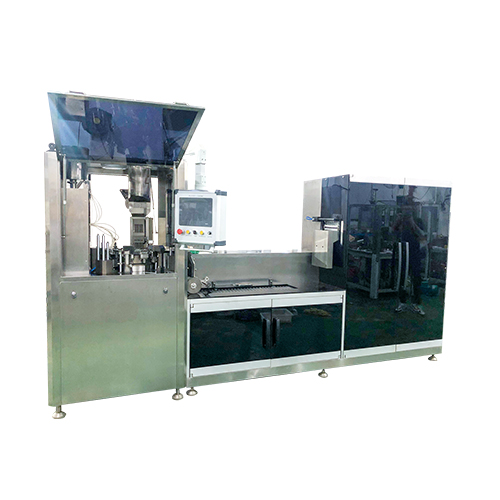
Liquid-filled capsule production lines are relatively simple. The core equipment includes a liquid capsule filling machine, capsule orientation system, sealing (banding) machine, and optional drying or inspection units. The absence of complex forming systems significantly reduces capital expenditure.
From a CAPEX (Capital Expenditure) standpoint, the difference between the two production lines is substantial.
Softgel production line typically includes:
· Gelatin melting and holding system
· Medicine preparation system (oil tanks, mixing systems)
· Rotary die encapsulation machine
· Tumble dryers and drying tunnels
· Chilling system and HVAC (strict humidity control 20–30%)
· Sorting and inspection systems
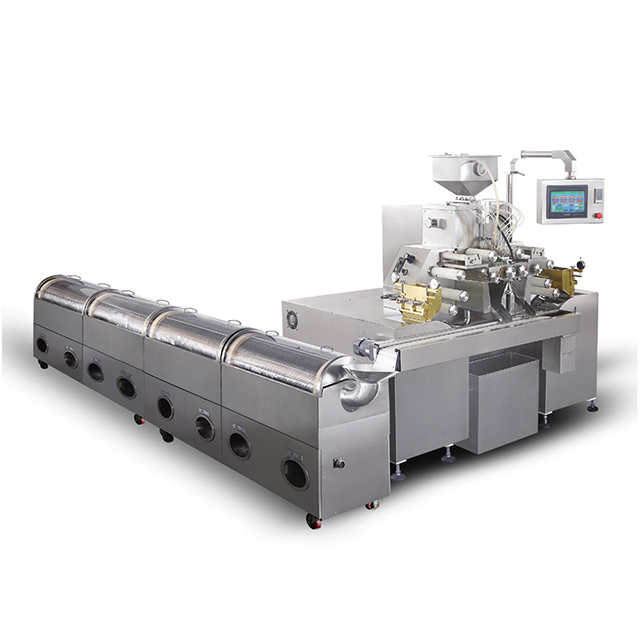
This integrated system requires high upfront investment, complex installation, and longer commissioning time.
Liquid-filled capsule production line includes:
· Automatic capsule filling machine
· Liquid dosing system
· Capsule orientation and locking system
· Band sealing machine
· Optional drying and inspection units
For procurement managers, this means:
· Lower entry barrier
· Faster ROI cycle
· Reduced infrastructure investment
Softgel production involves continuous operation, which reduces labor cost per unit at scale. However, it requires:
· Skilled technicians
· Precise gelatin formulation
· Strict environmental control (temperature and humidity)
· Regular maintenance of die rolls and sealing systems
Material costs are also higher due to gelatin, plasticizers, and oil-based fills.
Liquid-filled capsule production has lower technical barriers. It allows faster cleaning, easier product changeover, and lower maintenance costs. However, it may require additional steps such as band sealing and leak testing, which can increase labor involvement and reduce efficiency in large-scale production.
From a Total Cost of Ownership (TCO) perspective, procurement decisions must consider not only initial cost but also long-term operational expenses.
Softgel production:
· Continuous production reduces unit labor cost
· High material cost (gelatin, plasticizers, oils)
· Requires skilled operators and strict SOP management
· Preventive maintenance for die rolls and sealing systems is critical
Liquid-filled capsule production:
· Lower technical dependency
· Easier cleaning validation (important for GMP compliance)
· Faster product changeover (suitable for multi-SKU production)
· Slightly higher unit cost in large-scale production due to batch processing
Softgel production lines are designed for continuous, high-speed operation. A single rotary die machine can produce hundreds of thousands of capsules per hour, making it ideal for mass production. Scaling up production is efficient, as the process remains consistent once optimized.
Liquid-filled capsule production is typically batch-based. While modern automatic capsule filling machines can achieve high speeds, they are still less efficient than softgel systems in ultra-large-scale manufacturing. However, they offer excellent flexibility for small batches, pilot production, and multi-product lines.
Production capacity directly impacts supply chain planning and delivery commitments.
Softgel production lines:
· Continuous manufacturing mode
· Output can reach hundreds of thousands of capsules per hour
· Suitable for long production runs and stable demand products
· Less flexible for frequent product switching
Liquid-filled capsule lines:
· Batch production mode
· Flexible for small and medium batches
· Ideal for contract manufacturing and pilot production
· Easier to adapt to frequent order changes
Item | Liquid-Filled Capsule Line | Softgel Production Line |
Core Equipment | Capsule filling machine + sealing machine | Rotary die encapsulation machine |
Process Type | Filling → Sealing | Forming → Filling → Sealing (one step) |
Production Mode | Batch | Continuous |
Automation Level | Medium to high | Very high |
Changeover Flexibility | High | Low (requires die change) |
Environmental Requirement | Moderate | Strict (temperature & humidity control) |
Cleaning & Maintenance | Easy | Complex |
Technical Requirement | Moderate | High |
Cost Factor | Liquid-Filled Capsules | Softgel Capsules |
Initial Investment | Low to medium | High |
Equipment Complexity | Low | High |
Labor Cost | Moderate | Low (at scale) |
Material Cost | Moderate | Higher (gelatin + additives) |
Maintenance Cost | Low | High |
Cost per Unit | Higher (large scale) | Lower (mass production) |
Factor | Liquid-Filled Capsules | Softgel Capsules |
Production Speed | Medium to high | Very high |
Scalability | Flexible | Excellent |
Suitable Batch Size | Small to medium | Medium to large |
Efficiency | Moderate | High |
Softgel capsules are widely used in:
· Pharmaceutical industry (lipophilic drugs, poorly soluble APIs)
· Nutraceutical industry (fish oil, vitamins, herbal extracts)
· Cosmetic industry (beauty capsules, skincare supplements)
Liquid-filled hard capsules are mainly used in:
· Pharmaceutical R&D and specialty drugs
· Nutraceuticals requiring powder-liquid combinations
· Moisture-sensitive or multi-phase formulations
· Small batch or customized production
When selecting equipment suppliers, procurement teams should evaluate:
1. Compliance Capability
Whether the supplier can meet EU GMP and US FDA requirements, including documentation (IQ/OQ/PQ), material traceability, and validation support.
2. Customization Capability
Ability to provide tailored solutions based on product formulation (oil, suspension, volatile liquids).
3. After-Sales Support
Availability of overseas technical service, spare parts supply, and training.
4. Integration Capability
Whether the supplier can deliver turnkey solutions (from formulation to packaging).
Manufacturers such as Zhejiang Leadtop Pharmaceutical Machinery (LTPM CHINA) provide integrated solutions covering capsule filling machines, softgel encapsulation systems, and downstream packaging lines, which is particularly valuable for procurement teams seeking a single-source supplier.
From a buyer’s perspective, the selection can be summarized as follows:
· Choose softgel production line if:
o Target market is high-end supplements or OTC drugs
o Demand volume is large and stable
o Budget allows high initial investment
o Product requires superior appearance and sealing
· Choose liquid-filled capsule line if:
o Product portfolio is diverse
o Production scale is medium or uncertain
o Faster market entry is required
o Budget control and flexibility are priorities
The global market for liquid capsules and softgels is dominated by several key players:
· Catalent – leader in softgel CDMO manufacturing
· Lonza (Capsugel) – capsule and delivery technology provider
· Aenova Group – pharmaceutical contract manufacturer
· Sirio Pharma – nutraceutical softgel specialist
· EuroCaps – European softgel producer
· Thermo Fisher (Patheon) – pharmaceutical development and manufacturing
At the equipment level, manufacturers such as Zhejiang Leadtop Pharmaceutical Machinery (LTPM CHINA) provide complete solutions for both liquid capsule filling lines and softgel production lines, including customized turnkey projects tailored to EU and US GMP standards.
Softgel production lines are the preferred choice for large-scale, high-end products that require superior appearance, high bioavailability, and efficient mass production. However, they come with high investment and operational complexity.
Liquid-filled hard capsule lines provide a flexible, cost-effective alternative with lower entry barriers, making them ideal for startups, R&D, and diversified production needs.
Choosing between the two depends on your product positioning, budget, production scale, and formulation requirements.
If you are evaluating liquid capsule or softgel production solutions, we can help you design the most suitable production line based on your product and market needs.
Contact us now to receive:
· Free technical consultation and production line layout
· Customized equipment solutions with 5-year warranty
· Special discounts for complete turnkey projects
Let us help you build a competitive and efficient capsule production system.
 399 Dongxin Road, Ruian Economic Development Zone, Wenzhou City, Zhejiang Province, China


We use cookies to enhance your browsing experience and protect your privacy. Please read our privacy policy for more information.


