Capsule dosage forms have emerged as a dominant and preferred option in the pharmaceutical and nutraceutical industries for oral medication delivery. Unlike other solid forms such as tablets, capsules provide exceptional versatility in accommodating a wide range of active ingredients—including solids, semi-solids, and liquids. This adaptability makes them an ideal vehicle for many modern therapeutic and nutritional formulations.
As the industry continues to evolve, so too does capsule technology. From traditional hard and soft gelatin capsules to advanced modified-release and plant-based varieties, each type serves specific functional and market needs. Understanding these options is essential for manufacturers, developers, and health-conscious consumers alike.
In this article, we will explore the main types of capsule dosage forms, their structural and functional characteristics, and the production technologies that bring them to life.
Hard capsules represent one of the most widely used oral solid dosage forms, particularly suited for dry solid active ingredients. These capsules consist of two parts—a body and a cap—engineered to facilitate efficient filling and secure closure. Gelatin has historically been the material of choice, owing to its unique thermal-gelation properties that allow it to transition from a solution to a solid film just above room temperature.
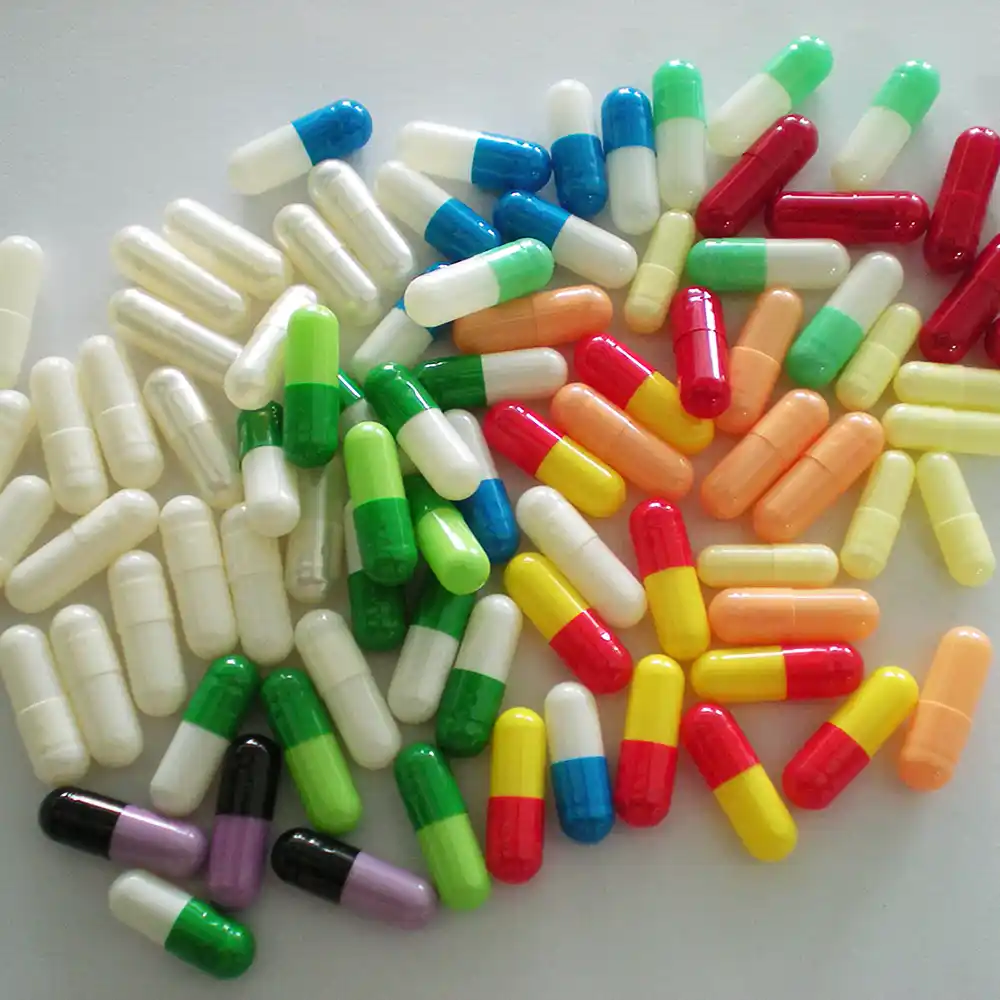
The traditional manufacturing process involves dipping metal pins into a heated gelatin solution. After withdrawal, the adhered film is dried in controlled conditioning kilns to achieve precise moisture content and mechanical strength. The dried capsule halves are then carefully removed, trimmed to exact lengths, and assembled—though left unlocked—for shipment to pharmaceutical manufacturers or compounding facilities.
A key advantage of hard capsules is their compatibility with a diverse range of fill materials. These include dry solids such as powders, granules, and pellets; semi-solids like pastes and suspensions; and even non-aqueous liquids including oils and alcoholic solutions. This formulation flexibility allows for combination therapies, wherein multiple active ingredients—even in different physical forms, such as a tablet alongside a powder—can be incorporated within a single capsule.
Softgel capsules, commonly referred to as softgels, are single-unit, hermetically sealed dosage forms consisting of a continuous gelatin-based shell surrounding a liquid or semi-solid inner fill. This unique one-piece construction differentiates them significantly from two-piece hard capsules and enables them to contain a wide range of non-solid formulations.
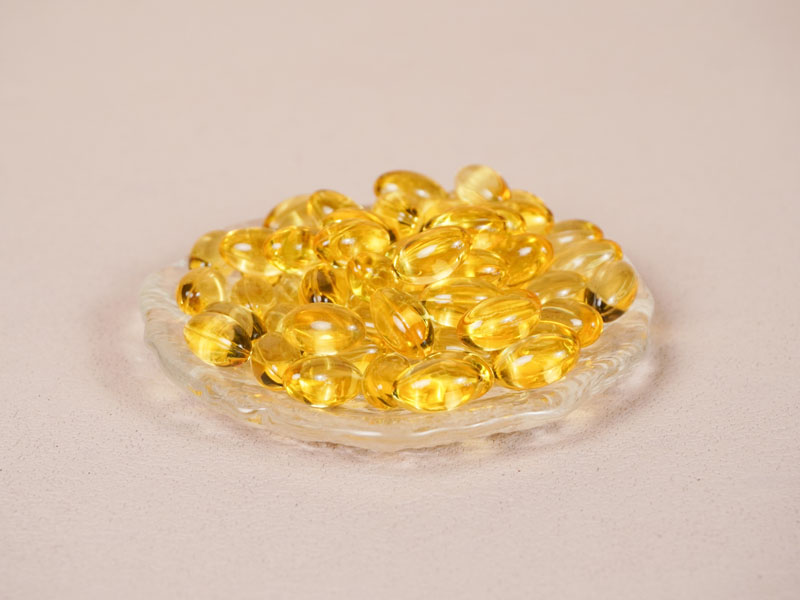
The composition of the softgel shell is critical to its functionality. It typically consists of gelatin, 6–13% water, and 20–30% plasticizers such as glycerin or sorbitol, which provide the characteristic elasticity and structural integrity. Additional excipients like opacifiers and colorants are often incorporated to improve stability and product identification. The shell formulation is carefully balanced to minimize migration between the fill and the shell, thereby maintaining the stability of the active ingredients.
Softgels are manufactured using specialized processes such as rotary die encapsulation, where the shell is formed, filled, and sealed in a single continuous operation. This method allows for high production efficiency while ensuring accurate dosing and complete encapsulation of the contents. The versatility of the manufacturing process supports a variety of customized shapes and sizes, enhancing both functional performance and brand recognition.
These capsules are particularly suitable for lipid-based fills, including oils, oil-based solutions, and suspensions. However, due to the water-based nature of the gelatin shell, aqueous solutions and highly water-soluble or moisture-sensitive compounds are generally not compatible with standard softgel formulations. A key advantage of softgels is their ability to improve the bioavailability of lipophilic active ingredients and effectively mask unpleasant tastes, contributing to higher patient compliance.
Modified-release capsules represent a sophisticated category of dosage forms specifically engineered to alter the pattern, location, or timing of drug release. Unlike immediate-release formulations, these systems are designed to control the liberation of active pharmaceutical ingredients, thereby maintaining therapeutic drug levels over an extended period through time-dependent or site-specific release mechanisms.
While conventional capsules are inherently immediate-release, various technological approaches can be applied to achieve modified release profiles. These methods include:
the incorporation of hydrophilic excipients within the fill to enhance release rates
the introduction of micro-vented systems containing effervescent agents such as citric acid and sodium bicarbonate
the application of functional polymer coatings including glucomannan, polyvinyl pyrrolidone, or HPMC phthalate esters (HPMCP) to accomplish delayed release
the use of multiparticulate systems like coated pellets or mini-tablets within capsules to control drug release kinetics.
Softgel capsules can also be modified for tailored release profiles. The addition of surfactants such as sodium lauryl sulfate can accelerate dissolution by improving water penetration, while the incorporation of heavy polymers or alginates into the gelatin matrix can impede release, resulting in sustained drug delivery.
The clinical benefits of modified-release capsules are substantial. Delayed- and extended-release systems can minimize peak-related side effects, reduce gastric irritation, and decrease dosing frequency—all of which contribute to improved patient compliance. Furthermore, by providing more consistent plasma drug concentrations, these advanced formulations enhance therapeutic efficacy and safety profiles for a wide range of active ingredients.
Enteric capsules represent a specialized category of modified-release dosage forms designed to resist dissolution in the acidic environment of the stomach while releasing their active ingredients in the higher pH conditions of the small intestine. This targeted release mechanism serves two primary purposes: to protect acid-labile drugs from degradation and to prevent gastric irritation caused by certain medications.
The enteric functionality is achieved through the application of pH-dependent polymer coatings to either hard or soft gelatin capsules. Common coating materials include cellulose acetate phthalate, HPMC phthalate (HPMCP), and various combinations of waxes and fatty acid esters. These polymers remain insoluble in acidic media but dissolve readily upon reaching the neutral or alkaline environment of the intestines. Some modern enteric materials operate through time-dependent erosion mechanisms rather than pH-dependent dissolution alone.
While enteric capsules can accommodate various fill formulations including oils, semi-solids, and suspensions, their use is typically reserved for compounds requiring specific protection from gastric acid or those known to cause gastric discomfort. The additional processing complexity and cost associated with enteric coating makes this technology particularly valuable for protecting sensitive biologics, certain probiotics, and drugs such as omeprazole that require specialized release profiles.
The encapsulation of active ingredients relies on two distinct filling technologies, each suited to specific material properties and product requirements. Powder filling, the established method for solid formulations, operates primarily through volumetric or dosator-based systems. In contrast, liquid filling employs precision metering systems such as ceramic pumps and servo-driven pistons, enabling the encapsulation of oils, solutions, and suspensions with high accuracy and minimal exposure to air or contaminants. The following table summarizes the key aspects of these two core technologies:
| Feature | Powder Filling | Liquid Filling |
|---|---|---|
| Working Principle | Volumetric or dosator-based measurement | Precision metering via pumps and servo systems |
| Typical Applications | Powders, granules, pellets | Oils, solutions, suspensions |
| Filling Accuracy | Moderate (variability requires control) | High (±2% or better) |
| Key Challenges | Dust generation, cross-contamination, powder flow uniformity | Leak prevention, sealing integrity, material compatibility |
| Critical Innovations | Improved agitators, dust extraction systems | Hermetic sealing technologies (e.g., banding, liquid sealing), precision pumps |
| Production Environment | Requires dust control measures | Dust-free, suitable for potent compounds |
Capsule dosage forms serve diverse application needs across multiple industries due to their versatility, precise dosing, and consumer-friendly properties. Key sectors and applications include:
Pharmaceutical Industry: Ideal for highly potent APIs (HPAPIs), poorly soluble drugs, and oral solutions requiring enhanced bioavailability and accurate dosing.
Nutraceuticals and Supplements: Widely used for fish oils, vitamin formulations, herbal extracts, probiotics, and other lipid-based nutritional products.
Cosmetics and Personal Care: Gaining prominence in "beauty-from-within" products such as collagen, hyaluronic acid, and antioxidant supplements.
Capsules offer formulation flexibility, effective masking of taste and odor, and compatibility with a broad spectrum of active ingredients, making them the preferred choice for innovative and consumer-oriented products in these fields.
Capsules deliver unmatched versatility for modern formulations, enabling precise dosing, enhanced stability, and superior patient compliance across pharmaceuticals, nutraceuticals, and cosmetics.
Elevate your production with LTPM’s high-precision capsule fillers and tablet press machines. Designed for efficiency and scalability, our equipment seamlessly handles everything from powders and tablets to liquid-filled capsules. Contact us today by [email protected] to optimize your manufacturing process with solutions built for innovation and reliability.
 399 Dongxin Road, Ruian Economic Development Zone, Wenzhou City, Zhejiang Province, China


We use cookies to enhance your browsing experience and protect your privacy. Please read our privacy policy for more information.


