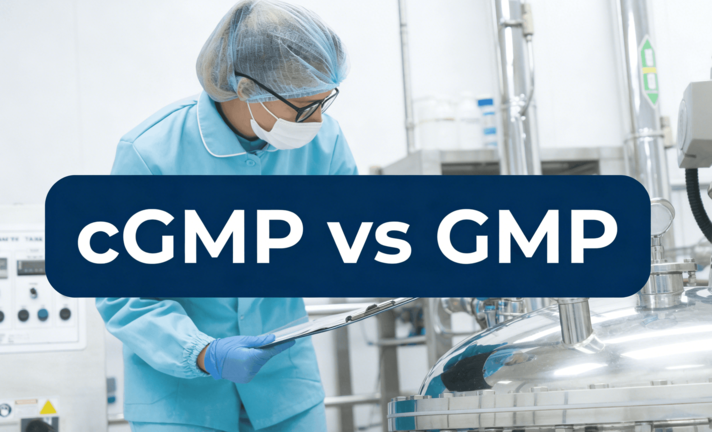
In the pharmaceutical industry, quality is not just a goal—it is a regulatory mandate. The debate between GMP and cGMP is at the heart of every facility’s compliance strategy. While both aim to ensure product safety, understanding the "c" in cGMP is what separates a modern manufacturer from an outdated one.
For manufacturers looking to export to regulated markets like the USA or EU, meeting current standards is the only way to avoid warning letters and production shutdowns.
This table highlights why the "current" aspect of cGMP is critical for modern pharmaceutical automation.
| Category | GMP (The Baseline) | cGMP (The Modern Standard) |
| Full Name | Good Manufacturing Practice | current Good Manufacturing Practice |
| Technology | Allows older, functional machinery. | Demands up-to-date technology & automation. |
| Data Integrity | Paper-based records are common. | Focuses on Electronic Records (21 CFR Part 11). |
| Process Control | Basic manual adjustments. | Automated, repeatable, and validated processes. |
| Risk Management | Reactive (fixing errors after they happen). | Preventive: Integrated sensors and real-time monitoring. |
| Validation | Basic equipment commissioning. | Comprehensive IQ/OQ/PQ documentation. |
The table above provides a snapshot of regulatory expectations. However, for a manufacturer utilizing LTPM machinery, cGMP is about more than just a label—it is about leveraging advanced automation to ensure every batch is identical to the last.
GMP stands for Good Manufacturing Practice. These are the minimum standards set by agencies like the FDA or EMA to ensure that products are consistently produced and controlled according to quality standards.
It covers everything from facility cleanliness and employee training to raw material handling. The goal of GMP is to minimize the risks involved in any pharmaceutical production that cannot be eliminated through testing the final product.
The "c" in cGMP stands for current. This is the most important distinction. It reminds manufacturers that they must employ technologies and systems which are up-to-date and comply with the latest regulations.
Technologies that were acceptable 10 years ago may no longer be considered compliant today. For example, manual weight checking in a capsule filling line might have passed GMP in the past. Under cGMP, the FDA expects automated, 100% weight-sorting systems to minimize human error.
One of the most visible differences between GMP and cGMP is the level of automation required on the factory floor.
Basic GMP allows older equipment as long as it is clean and functional. However, legacy machines often lack the precision needed for modern, complex formulations.
LTPM’s automated machinery, such as the NJP series capsule fillers, is built for the cGMP era. By utilizing Servo Motor technology and high-precision sensors, our machines ensure every mechanical movement is repeatable, reducing the risk of costly batch deviations.
In a cGMP environment, accurate documentation is as important as the product itself. The shift from paper to digital is a core requirement of modern compliance.
Traditional GMP often relies on manual logbooks, which are prone to human error. cGMP emphasizes Electronic Batch Records (EBR) to ensure data integrity.
LTPM equipment control systems are designed to support FDA 21 CFR Part 11 requirements, including:
Audit Trails: Every parameter change is timestamped and logged with the operator's ID.
Multi-level Access: Secure logins ensure only authorized personnel can modify critical settings.
Data Traceability: Seamlessly export production data for total transparency during audits.
cGMP shifts the focus from "testing for quality" at the end of the line to "building quality into the process."
Under cGMP, regulators expect real-time monitoring. LTPM machines use advanced sensors to detect "no capsule, no fill" scenarios or monitor tamping pin pressure. This allows you to identify issues before the batch is completed.
By monitoring the entire production flow rather than just sampling, you save thousands of dollars in wasted API (Active Pharmaceutical Ingredients) and raw materials.
A machine cannot be considered cGMP compliant on its own; it must be validated within your specific facility.
Unlike generic equipment suppliers, LTPM provides a comprehensive documentation package to support your compliance audits:
IQ (Installation Qualification): Verifying the machine is installed per specifications.
OQ (Operational Qualification): Testing the machine's performance across its full operating range.
PQ (Performance Qualification): Demonstrating the process consistently meets quality requirements.
cGMP is very specific about the materials that come into contact with the drug product.
While basic GMP focuses on "cleanliness," cGMP requires the use of SS316L stainless steel for all product contact parts. LTPM ensures all contact surfaces are polished to a mirror finish (Ra < 0.4μm) to prevent bacterial growth and ensure easy cleaning.
The higher initial investment in cGMP-compliant equipment offers a significantly better long-term ROI.
If you intend to sell in the USA, Europe, or other strictly regulated regions, cGMP is non-negotiable. Investing in cGMP-ready machinery from LTPM opens the door to the world's most profitable markets.
The cost of an FDA warning letter or a product recall far outweighs the price of an automated, validated production line. cGMP-compliant machines are your insurance against regulatory failure.
The transition from GMP to cGMP is about embracing the future. By focusing on "current" technologies—automation, data integrity, and precision engineering—you protect your brand and your patients.
LTPM CHINA provides the machinery and the validation support necessary to keep your facility at the forefront of global standards. Don't just meet the baseline; lead the industry with cGMP excellence.
1. Is GMP still acceptable for local markets?
While some regions have lower barriers, the global trend is moving toward cGMP. Following cGMP today future-proofs your facility against upcoming regulatory changes.
2. What is the most common reason for audit failure?
While some regions have lower barriers, the global trend is moving toward cGMP. Following cGMP today future-proofs your facility against upcoming regulatory changes.
3. Does LTPM provide onsite training for cGMP compliance?
Yes. We provide comprehensive operator training during our SAT (Site Acceptance Test) to ensure your team can operate the equipment within a cGMP-compliant workflow.
Are you planning to upgrade your facility or enter a new regulated market? Don't let outdated equipment hold you back.
LTPM CHINA specializes in cGMP-compliant Capsule Fillers, Tablet Presses, and Packaging Lines designed for the modern pharmaceutical era. Contact LTPM Today by [email protected] for a cGMP Solution.
 399 Dongxin Road, Ruian Economic Development Zone, Wenzhou City, Zhejiang Province, China


We use cookies to enhance your browsing experience and protect your privacy. Please read our privacy policy for more information.


