



-
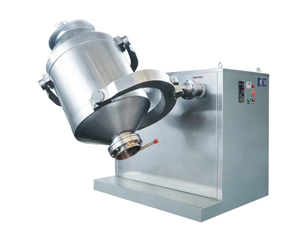
What type of materials is the 3D mixer suitable for?

The 3D mixer is ideal for poorly flowing, fine, or cohesive powders—such as APIs, starches, or vitamin blends—that are hard to homogenize. Its blade-free, multi-axis motion ensures uniform mixing without segregation or particle damage.
-
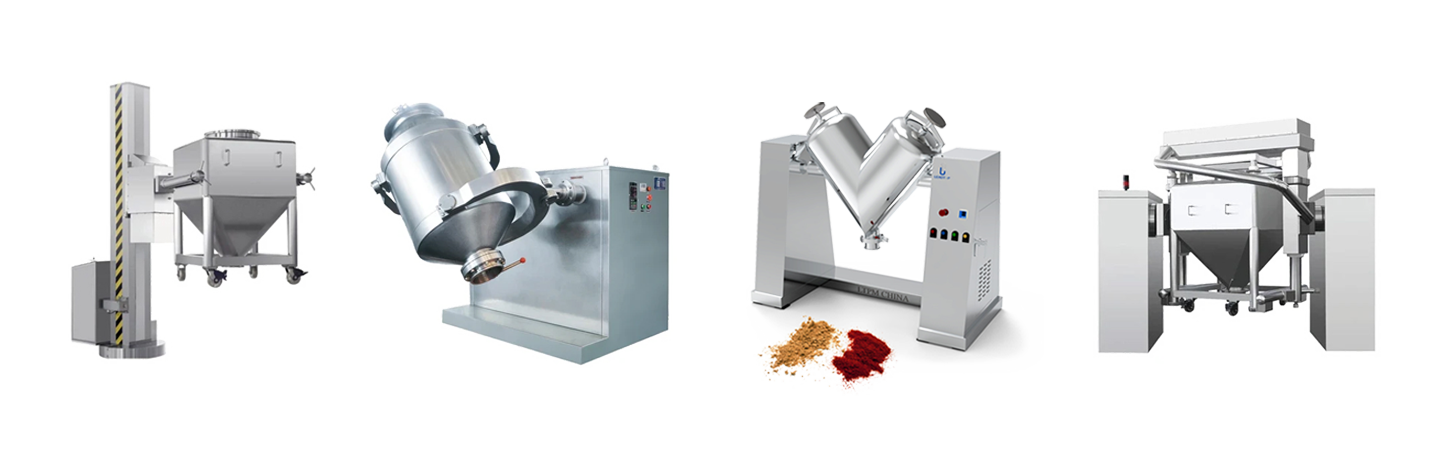
What are the advantages and disadvantages of the lifting mixer and V-type mixer at LTPM?
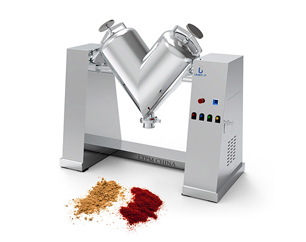
LTPM's lifting mixer offers high mixing uniformity, with a movable hopper that greatly facilitates loading, mixing, discharging, and cleaning. It can be seamlessly integrated with upstream and downstream equipment to form a production line, preventing cross-contamination caused by repeated material transfer. On the other hand, our V-type mixer provides more uniform mixing and can include forced stirring for better consistency, but it is less convenient to clean compared to the lifting mixer.
-
Does the powder mixer require specific material flowability?
Not necessarily. Our powder mixers, especially 3D and V-type models, use gentle, blade-free tumbling action to blend both free-flowing and cohesive powders effectively, making them suitable for a wide range of pharmaceutical materials.
-
Does container mixing leave behind residual material?
Residual material depends mainly on powder flowability and mixer design. For free-flowing powders, our container mixers feature smooth, sloped bottoms and full-discharge valves to minimize residue—typically below 0.1%. Cohesive or fine powders may require optimized cleaning procedures.


 399 Dongxin Road, Ruian Economic Development Zone, Wenzhou City, Zhejiang Province, China

